


Oil spills in the Ocean
scroll down

What are oil spills
s u m m e r y
Oil spills are harmful to marine birds and mammals as well as fish and shellfish. Oil destroys the insulating ability of fur-bearing mammals, such as sea otters, and the water repellency of a bird's feathers, thus exposing these creatures to the harsh elements.
Accidental spills from ships account for about 15 percent of the oil entering the ocean every year. Tankers and barges have spilt nearly six million tons of oil into the marine environment since 1970, with large spills (greater than 700 tones) responsible for most of the oil spilt into water bodies.
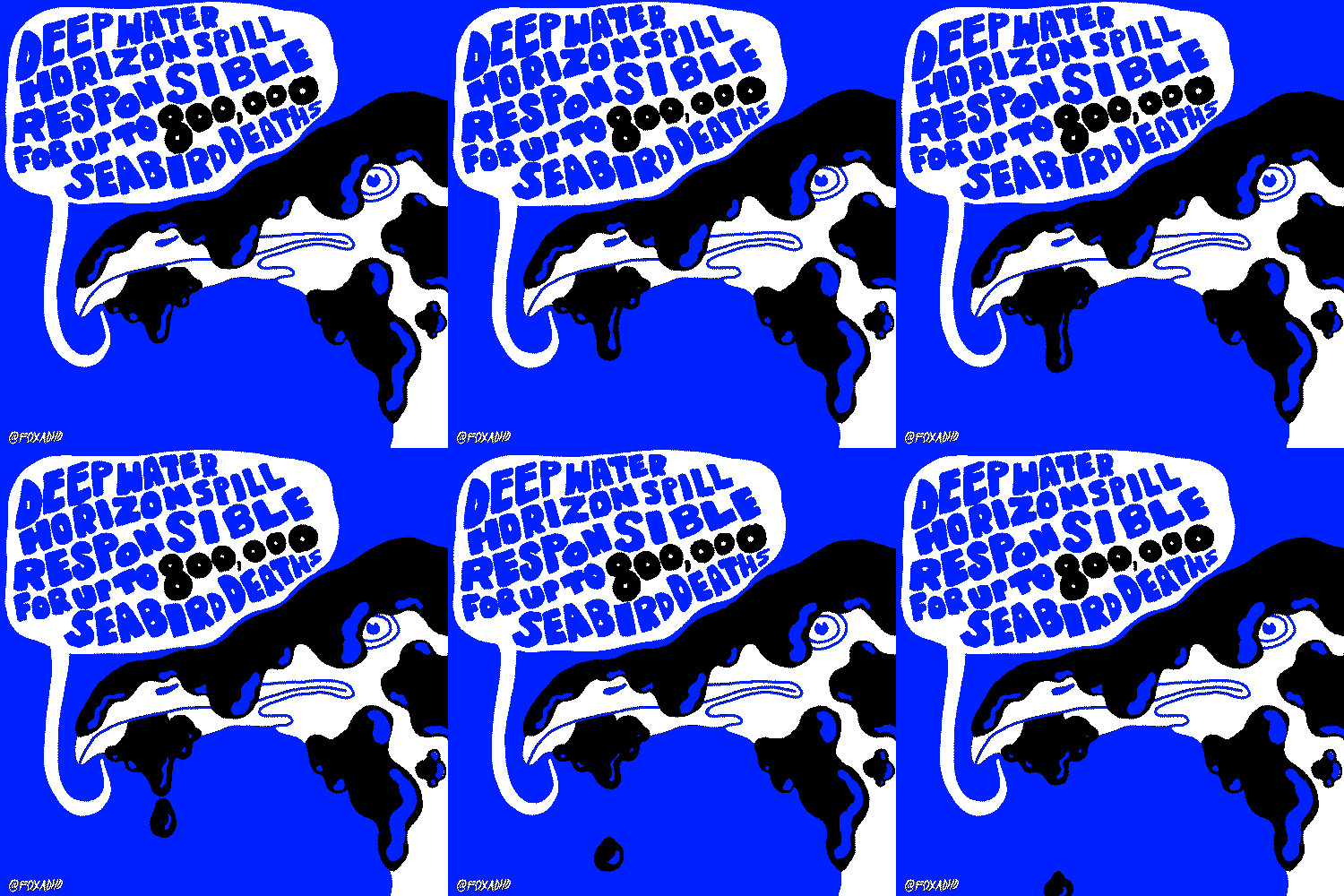


M a i n f a c t s
Where does the oil come from?
Pipelines and fixed facilities are responsible for more than two-thirds of oil spilt onto water or land. Accidental spills from ships account for about 15 percent of the oil entering the ocean every year. Tankers and barges have spilt nearly six million tons of oil into the marine environment since 1970, with large spills responsible for most of the oil spilt into water bodies. In 2005, spillage from tankers and barges was about 17,000 tones. Oil spills happen most frequently in the Gulf of Mexico, northeastern United States and the Mediterranean Sea.
How much oil is spilt into the ocean every year?
According to the U.S. Department of Energy, 1.3 million gallons (4.9 million litres) of petroleum are spilt into U.S. waters from vessels and pipelines in a typical year. A major oil spill could easily double that amount.
Oil and water don’t mix
If you’ve seen pictures of the thick oil in the water, you may wonder why it doesn’t sink in the ocean. Oil is less dense, or has less weight for a certain amount, than water. Experts say tiny bits of oil naturally seep into the ocean all the time. Microbes, microscopic life-forms, living in the ocean break down these little bits of oil. But microbes are overwhelmed by such a big oil spill. Nature helps get rid of the oil in other ways. Some of it will evaporate, or become part of the air. Some will be broken down by water and light. Some of the oil from the well will eventually attach to other particles in the water and settle on the bottom of the sea.


Try this: Fill a drinking glass with water, then drop a teaspoon of vegetable oil into the water. Even though the oil seems thicker, it floats on the surface of the water.
How would we get rid of the oil?
Experts say once oil is spilled, it’s hard to clean up. Since the accident on April 20, many different methods have been tried to clean up the oil.
Break it up
Scientists have tried using dispersants (dis-PURS-ants) — chemicals that do sort of the same thing as natural microbes. Dispersants break up oil into small droplets that attach to other things in the water, such as plants and animals. But these chemicals also make it harder for people to “capture” the oil.
Burn it off
Workers have also tried burning the oil off the surface of the ocean. This method is difficult because of weather and tides putting out the fires. Also, the fires can add to air pollution. Skim it off
A skimmer moves across the water surface and sucks up the oil floating there. But usually it gathers much more water than oil.


Yellow booms in the water surround a piece of land where brown pelicans land.

What about the leaks?
The company that owns the oil well and scientists are working hard to stop the leak at the bottom of the ocean. You have probably heard news reports about many different ideas they’ve tried. Experts say the only sure way to stop the leak is to drill a new well, called a relief well, close to the damaged one. They will use the new well to pump a special heavy liquid into the broken well, followed by cement, shutting off the leaking oil. But this will take months. In the meantime, in early June a funneltype structure called a containment cap was lowered over the leaking well. A pipe leading up to container ships collects some of the oil, but the cap isn’t a tight fit, so some of it is still spilling into the ocean.
lets save our world
take action
These animals need us, our oceans need us. We have to protect them from all the harm we create


